





What Is Product Data Enrichment? A Practical Guide to Better Ecommerce Catalogs
Uploading ten products to an online store rarely creates problems. Uploading 80,000 products from six different suppliers is where things begin to fall apart.
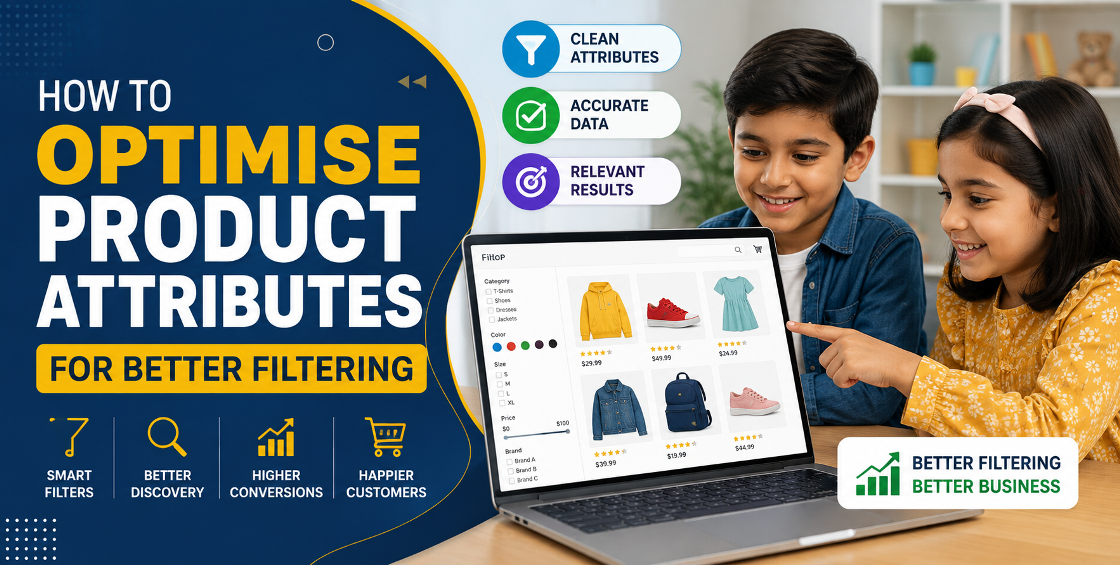
One apparel retailer inherited product feeds from multiple manufacturers. Some products had color names like "Navy Blue," others simply said "Blue," while a few used internal supplier codes. Sizes appeared as Small, S, and SM depending on the vendor. Customers struggled to filter products correctly, duplicate listings appeared, and marketplace approvals slowed because required attributes were missing.
The issue wasn't the products—it was the data behind them.
This is exactly where product data enrichment becomes essential.
Rather than simply importing supplier information, businesses improve, standardize, organize, and expand product information so customers, marketplaces, and internal systems all work with consistent, reliable data.
What Is Product Data Enrichment?
Product data enrichment is the process of improving existing product information by adding, correcting, organizing, and standardizing product attributes to create complete, accurate, and searchable product listings.
Instead of relying solely on supplier spreadsheets, enrichment transforms basic product records into detailed product catalogs that include information customers actually use when making purchase decisions.
This may involve adding:
- Product specifications
- Technical attributes
- High-quality descriptions
- Feature lists
- Compatible accessories
- Search keywords
- Standardized categories
- Product dimensions
- Material information
- Color variations
- Lifestyle images
- SEO metadata
The goal isn't to add more information for the sake of it. It's to provide the right information in a structured format that supports shopping experiences across ecommerce websites, marketplaces, and comparison platforms.
What Information Gets Enriched?
Supplier catalogs often contain only the minimum data required for inventory management.
A well-enriched product catalog usually includes much more.
Product Titles
Many supplier titles are designed for internal use.
For example:
| Supplier Title | Customer-Friendly Title |
|---|---|
| ABC-1204 BK 15L | 15L Black Waterproof Hiking Backpack with Padded Laptop Compartment |
The second version immediately tells shoppers what they're looking at.
Product Attributes
Attributes improve filtering and navigation.
Examples include:
- Brand
- Material
- Capacity
- Color
- Weight
- Dimensions
- Finish
- Compatibility
- Warranty
- Country of Origin
Without structured attributes, shoppers cannot effectively narrow product selections.
Product Descriptions
Instead of copying manufacturer text, enriched descriptions explain:
- Primary benefits
- Intended use
- Ideal customer
- Maintenance instructions
- Unique selling points
This creates a better shopping experience while reducing duplicate content across websites.
Product Images
Enrichment may include:
- Image naming
- Alternate views
- Zoom images
- Lifestyle photos
- Infographics
- Consistency checks
Clear visuals often answer questions that text alone cannot.
SEO Information
Many ecommerce platforms allow custom SEO fields.
Typical additions include:
- Meta title
- Meta description
- URL slug
- Search keywords
- Alt text for images
These elements help search engines understand product pages more effectively.
Why Raw Supplier Data Isn't Enough
Supplier catalogs serve manufacturers.
Online stores serve shoppers.
Those are two very different audiences.
Consider a supplier spreadsheet containing:
| Supplier Data | Customer Expectation |
|---|---|
| Item Code | Clear product name |
| Color Code | Visible color selection |
| Size ID | Readable size options |
| Weight | Shipping information |
| Internal Category | Easy browsing category |
| Technical Notes | Helpful buying information |
Simply importing supplier files often creates inconsistent listings across platforms.
Retailers selling through Shopify, WooCommerce, Amazon, Walmart Marketplace, or eBay usually need additional formatting to meet each platform's requirements.
A Typical Product Data Enrichment Workflow
Every organization has its own process, but experienced ecommerce operations teams usually follow a structured workflow.
1. Data Collection
Gather information from:
- Supplier catalogs
- Manufacturer websites
- Specification sheets
- Existing databases
- Product manuals
- Image repositories
2. Data Cleaning
Before adding new information, existing data must be reviewed for:
- Duplicate SKUs
- Missing fields
- Inconsistent formats
- Spelling errors
- Outdated specifications
Skipping this step often creates larger issues later.
3. Attribute Standardization
Imagine three suppliers describing the same color as:
- Dark Grey
- Charcoal
- Grey
A retailer may decide to standardize these values based on merchandising rules while preserving original manufacturer information where needed.
This consistency improves search filters and customer navigation.
4. Content Enhancement
Next comes content creation.
Teams expand:
- Product descriptions
- Feature bullets
- Technical specifications
- Buying guides
- Compatibility notes
The objective is to answer common customer questions before they arise.
5. Image Verification
Images are checked for:
- Resolution
- Background consistency
- Duplicates
- Naming conventions
- Missing angles
Poor image management often leads to rejected marketplace listings.
6. Quality Assurance
Before publication, every product should be validated.
Quality checks typically include:
- Mandatory attributes
- Category mapping
- Broken image links
- Spelling review
- Pricing verification
- Variation relationships
Only then is the catalog ready for publishing.
Common Challenges Retailers Face
Even experienced ecommerce teams encounter recurring data issues.
Multiple Supplier Formats
One vendor provides Excel sheets.
Another sends CSV files.
A third shares PDFs.
Each format requires normalization before products can be imported consistently.
Rapid Catalog Expansion
Adding hundreds of new products every week introduces challenges such as:
- Duplicate listings
- Inconsistent naming
- Missing specifications
- Incorrect categories
Without a repeatable workflow, catalog quality gradually declines.
Marketplace Compliance
Every marketplace has different attribute requirements.
Amazon may require one set of product fields, while another marketplace expects different mandatory attributes.
Managing these variations manually becomes increasingly difficult as catalogs grow.
Legacy Product Data
Businesses operating for several years often inherit product information from older systems.
Some records may have:
- Outdated descriptions
- Obsolete categories
- Discontinued attributes
- Inconsistent formatting
Cleaning years of accumulated data can become a substantial project.
Best Practices for Product Data Enrichment
Successful ecommerce teams treat enrichment as an ongoing process rather than a one-time project.
Build Attribute Standards
Create standardized naming rules for:
- Colors
- Sizes
- Materials
- Brands
- Measurements
Consistency improves reporting and customer filtering.
Create Category Templates
Instead of entering information manually every time, define required fields for each product category.
For example:
Electronics may require:
- Voltage
- Warranty
- Connectivity
- Battery type
Furniture may require:
- Dimensions
- Material
- Finish
- Assembly information
Templates reduce omissions and speed up catalog expansion.
Review Supplier Data Before Import
Even trusted suppliers occasionally introduce formatting changes.
A quick validation before importing data helps prevent large-scale catalog errors.
Keep Product Information Current
Product specifications change.
Packaging changes.
Manufacturers discontinue features.
Regular catalog reviews help keep listings accurate and reduce customer confusion.
When Should Businesses Outsource Product Data Enrichment?
Many retailers begin handling product information internally.
As catalogs grow, maintaining consistency becomes significantly more demanding.
Managing thousands of SKUs across multiple sales channels often requires dedicated workflows, quality checks, and platform-specific expertise.
At India Data Entry Services, we've worked with ecommerce businesses managing extensive product catalogs where enrichment became an ongoing operational process rather than an occasional cleanup task. Dedicated catalog teams can help maintain consistency while allowing in-house staff to focus on merchandising, marketing, and customer experience.
Outsourcing is particularly useful when businesses need to:
- Launch large product catalogs quickly
- Migrate between ecommerce platforms
- Improve marketplace listing quality
- Standardize supplier data
- Support seasonal catalog updates
- Maintain multilingual product information
The right approach depends on catalog size, update frequency, and available internal resources.
Final Thoughts
Product data enrichment is much more than editing product descriptions. It is the foundation of a well-organized ecommerce catalog that supports better search, smoother navigation, cleaner marketplace submissions, and a more consistent customer experience.
When product information is complete and standardized, everyday operations—from inventory management to merchandising and customer support—become easier to manage. Whether you're handling a few hundred SKUs or hundreds of thousands, investing in accurate, structured product data pays dividends in efficiency and customer satisfaction.
Frequently Asked Questions
1. What is product data enrichment?
Product data enrichment is the process of improving product information by adding complete, accurate, standardized, and structured details such as attributes, descriptions, specifications, images, and SEO metadata.
2. Why is product data enrichment important for ecommerce?
It improves product discoverability, enhances the customer shopping experience, supports marketplace compliance, and helps maintain consistent product information across multiple sales channels.
3. What is the difference between product data enrichment and product data cleansing?
Data cleansing focuses on correcting errors, removing duplicates, and fixing inconsistencies. Data enrichment goes further by adding valuable information that makes product listings more complete and useful.
4. Which businesses benefit the most from product data enrichment?
Retailers, manufacturers, distributors, wholesalers, and marketplace sellers with medium to large product catalogs benefit the most, especially when managing products across multiple ecommerce platforms.
5. Can product data enrichment improve SEO?
Yes. Enriched product titles, descriptions, structured attributes, image alt text, and metadata help search engines better understand product pages while improving the user experience.
Call to Action
Managing product information becomes increasingly complex as your catalog grows. If your team is spending more time correcting product data than launching new products, it may be time to review your catalog workflows. India Data Entry Services supports businesses with product data enrichment, catalog management, and marketplace listing services designed to keep large product databases accurate, organized, and ready for publication.