



Shift4Shop vs WooCommerce: Which Ecommerce Platform Is Better for Growing Online Stores?
Choosing an ecommerce platform often starts as a technical decision but quickly becomes an operational one.
Launching an online store with 100 products is fairly straightforward. Managing 30,000 products, multiple warehouses, seasonal pricing, marketplace feeds, and daily inventory updates is where the real challenges begin.
We've seen retailers spend weeks comparing features, only to realize months later that product management, integrations, and backend workflows mattered far more than the storefront itself.
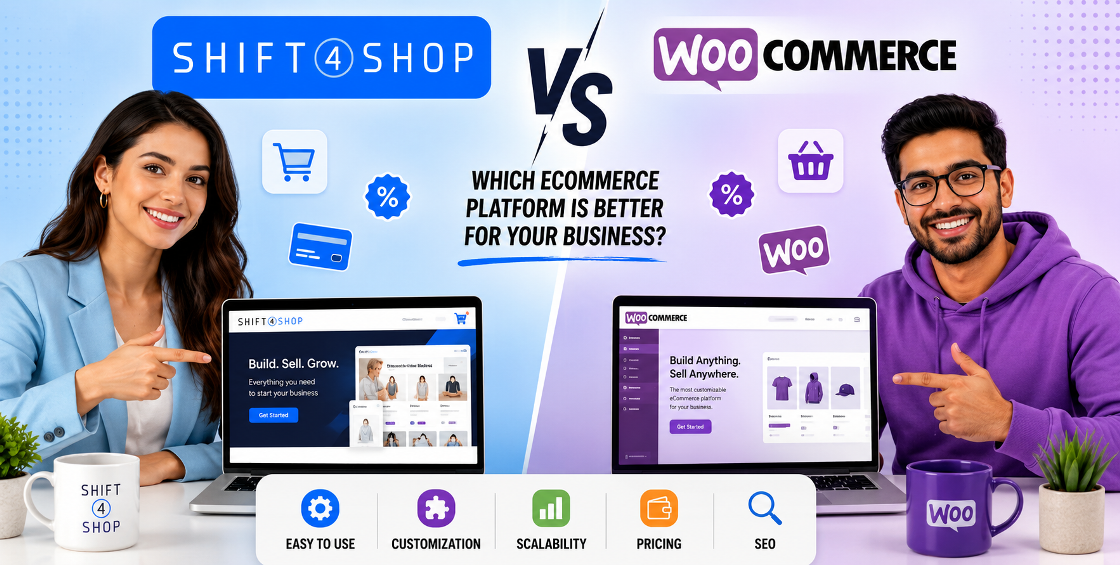
If you're deciding between Shift4Shop vs WooCommerce, this comparison looks beyond marketing checklists and focuses on how each platform performs once your catalog grows and day-to-day operations become more demanding.
Quick Overview
| Feature | Shift4Shop | WooCommerce |
|---|---|---|
| Platform Type | Hosted SaaS | Self-hosted WordPress plugin |
| Ease of Setup | Simple | Moderate |
| Customization | Moderate | Extensive |
| Product Management | Built-in | Plugin dependent |
| SEO Flexibility | Good | Excellent |
| Scalability | Good | Excellent with proper hosting |
| Maintenance | Minimal | User-managed |
| Ideal For | Small to medium businesses | Businesses of all sizes needing flexibility |
Understanding the Biggest Difference
Although both platforms help businesses sell online, they follow very different approaches.
Shift4Shop
Shift4Shop is a hosted ecommerce solution.
The hosting, security, updates, and many core ecommerce features are already included. Store owners spend less time maintaining infrastructure and more time managing products and orders.
This appeals to businesses that prefer an all-in-one environment without assembling multiple tools.
WooCommerce
WooCommerce transforms a WordPress website into an ecommerce store.
Instead of providing everything out of the box, it allows merchants to build exactly what they need through themes, plugins, APIs, and custom development.
That flexibility is one of WooCommerce's biggest strengths—but it also means more responsibility for updates, hosting, backups, and compatibility.
When Product Catalogs Start Growing
A clothing retailer may begin with 500 products.
Six months later, they have:
- 12,000 SKUs
- Color variants
- Size combinations
- Multiple suppliers
- Seasonal pricing
- Marketplace listings
- Bulk inventory imports
Managing this kind of catalog requires more than an attractive storefront.
The platform must support:
- Bulk uploads
- CSV imports
- Inventory synchronization
- Category management
- Image handling
- Attribute mapping
- Duplicate prevention
At India Data Entry Services, we've worked with businesses maintaining product catalogs across several ecommerce platforms, and one recurring lesson is that backend catalog organization has a much greater impact on daily operations than many teams anticipate.
Ease of Store Management
Shift4Shop
Shift4Shop provides many ecommerce features immediately after setup.
Store owners can access:
- Product management
- Coupons
- Shipping settings
- Payment gateways
- Customer groups
- Inventory tools
without installing dozens of additional extensions.
This reduces initial configuration time.
However, businesses with unique operational requirements may eventually reach customization limits.
WooCommerce
WooCommerce starts with a lean core.
Additional capabilities come through plugins.
Examples include:
- Subscriptions
- Advanced search
- Product bundles
- B2B pricing
- Multilingual stores
- ERP integrations
- CRM connectivity
This modular approach allows businesses to build workflows that closely match their operations.
The tradeoff is increased plugin management and ongoing maintenance.
SEO Capabilities
Search visibility often depends on how much control you have over technical SEO.
WooCommerce benefits from the broader WordPress ecosystem, offering advanced options for:
- Custom URLs
- Metadata
- Schema markup
- Internal linking
- Blog content
- Redirects
- Image optimization
Content-heavy businesses frequently appreciate this level of flexibility.
Shift4Shop includes solid SEO functionality as well, covering essentials such as customizable URLs, metadata, XML sitemaps, and canonical tags. For many businesses, these built-in tools are sufficient without additional configuration.
Customization: How Much Control Do You Really Need?
Imagine two businesses.
Business A
Sells handcrafted candles.
Needs:
- Online payments
- Shipping
- Coupons
- Inventory tracking
Shift4Shop may provide everything required without significant development.
Business B
Operates internationally with:
- Dealer pricing
- ERP integration
- Custom product configurators
- Supplier automation
- Customer-specific catalogs
WooCommerce offers considerably more flexibility for these advanced workflows.
Pricing Beyond the Subscription
The visible monthly fee rarely reflects the total cost of ownership.
With WooCommerce, expenses can include:
- Hosting
- Premium themes
- Security tools
- Backups
- Premium plugins
- Developer support
- Performance optimization
Some stores keep costs low, while others invest substantially as complexity grows.
Shift4Shop packages many features together, making budgeting more predictable, though businesses should still evaluate payment processing requirements and any premium add-ons they may need.
Rather than comparing subscription prices alone, estimate what your business will require over the next two to three years.
Performance Under Larger Catalogs
As product counts increase, database efficiency becomes increasingly important.
Consider a furniture retailer with:
- 60,000 products
- 250 categories
- 500,000 product images
- Thousands of daily inventory updates
Performance depends on factors beyond the ecommerce platform itself.
For WooCommerce, hosting quality, caching, image optimization, and database maintenance all influence speed.
Shift4Shop manages much of the underlying infrastructure, reducing technical administration for merchants.
Neither platform automatically guarantees excellent performance—catalog organization and optimization practices remain essential.
Managing Marketplace Expansion
Many online retailers eventually expand beyond their primary website.
They begin selling through:
- Amazon
- eBay
- Walmart Marketplace
- Google Shopping
- Facebook Shop
This creates new operational challenges:
- Duplicate listings
- Inconsistent descriptions
- Pricing conflicts
- Inventory mismatches
- Image inconsistencies
Regardless of platform choice, standardized product data becomes critical before expanding into multiple sales channels.
One retailer approached us after discovering nearly identical products listed under different names across marketplaces, making inventory reconciliation unnecessarily difficult. The issue wasn't caused by the platform—it stemmed from inconsistent catalog management practices that had accumulated over time.
Security and Maintenance
Shift4Shop
Since it's hosted:
- Platform updates are managed
- Infrastructure is maintained
- Security management is simplified
Businesses with limited technical resources often appreciate this hands-off approach.
WooCommerce
WooCommerce places greater control in the hands of the store owner.
That also means responsibility for:
- WordPress updates
- Plugin compatibility
- Backups
- Security monitoring
- Hosting performance
Businesses comfortable managing websites—or working with experienced developers—often view this flexibility as an advantage.
Which Platform Fits Different Business Types?
Choose Shift4Shop if you:
- Want a hosted solution
- Prefer minimal technical maintenance
- Need predictable platform management
- Want many ecommerce features available immediately
Choose WooCommerce if you:
- Require extensive customization
- Rely on content marketing
- Want complete ownership of your website
- Expect custom integrations in the future
- Have access to technical expertise
Questions to Ask Before Choosing
Instead of asking which platform is "better," ask:
- How many products will we manage in two years?
- Will we sell across multiple marketplaces?
- How much customization will we realistically require?
- Who will maintain the website?
- Do we need complex product relationships?
- How important is content marketing?
- Will our catalog require frequent bulk updates?
The answers often make the decision much clearer than feature comparison charts.
Final Thoughts
The Shift4Shop vs WooCommerce debate doesn't have a universal winner because every ecommerce operation evolves differently.
Shift4Shop reduces much of the technical workload by providing a managed environment with a broad set of built-in commerce features.
WooCommerce offers exceptional flexibility, making it attractive for businesses that anticipate custom workflows, advanced integrations, or content-driven growth.
The platform you choose should support not only today's storefront but also tomorrow's catalog, inventory processes, and operational complexity.
As catalogs expand, the quality of product data becomes just as important as the platform itself. At India Data Entry Services, we've supported retailers with large-scale product uploads, catalog maintenance, data cleansing, and marketplace listing management across a variety of ecommerce ecosystems, helping ensure that growth isn't slowed by backend data issues.