



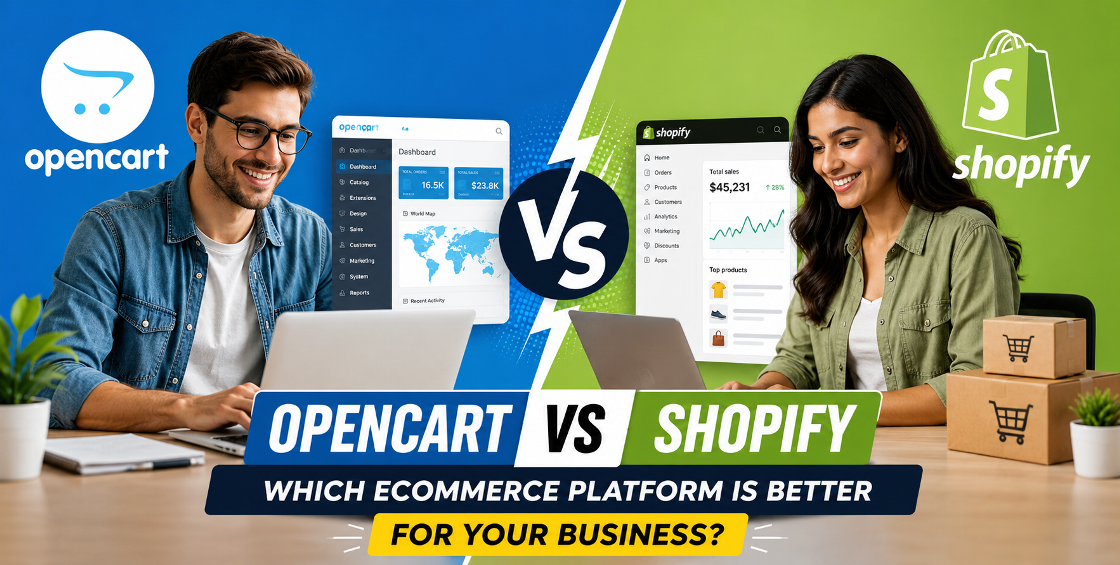
OpenCart vs Shopify: Which Ecommerce Platform Is Better for Growing Online Stores?
A store with 200 products can usually get away with almost any ecommerce platform. Things change quickly when that catalog grows to 20,000 products, inventory comes from multiple suppliers, and listings must stay synchronized across Amazon, eBay, Google Shopping, and the company website.
We've seen retailers spend more time correcting product information than selling products. Duplicate SKUs, inconsistent attributes, missing images, and outdated pricing often become everyday issues—not because the products are difficult to manage, but because the platform wasn't chosen with long-term operations in mind.
If you're deciding between OpenCart vs Shopify, the right answer depends less on which platform has more features and more on how you expect your business to operate over the next several years.
This comparison looks beyond marketing checklists and focuses on the practical realities of running an ecommerce business.
Understanding OpenCart
OpenCart is an open-source ecommerce platform that gives merchants complete ownership over their online store. Since it's self-hosted, businesses are responsible for hosting, maintenance, updates, security, and server performance.
That extra responsibility also comes with flexibility.
Developers can modify nearly every aspect of the store, create custom modules, integrate specialized business systems, and optimize performance according to unique operational requirements.
OpenCart often appeals to businesses that already have technical resources or require highly customized ecommerce environments.
Understanding Shopify
Shopify takes a different approach.
Instead of managing hosting, software updates, security patches, and infrastructure, merchants subscribe to a hosted platform where these responsibilities are handled automatically.
This allows businesses to focus on merchandising, marketing, and customer experience rather than server administration.
Its ecosystem of themes, apps, payment gateways, and marketplace integrations makes Shopify particularly attractive for businesses that want to launch quickly with minimal technical involvement.
OpenCart vs Shopify: Side-by-Side Comparison
| Feature | OpenCart | Shopify |
|---|---|---|
| Hosting | Self-hosted | Fully hosted |
| Initial Setup | Technical | Beginner-friendly |
| Monthly Costs | Lower software cost but hosting required | Monthly subscription |
| Customization | Extensive | High within platform limitations |
| Maintenance | Merchant responsibility | Included |
| Security | Self-managed | Managed by Shopify |
| Scalability | Depends on hosting infrastructure | Cloud-based scalability |
| App Marketplace | Extensions available | Large app ecosystem |
| Development Flexibility | Excellent | Moderate to high |
| Time to Launch | Longer | Faster |
Product Catalog Management: Where Operational Differences Become Clear
Many ecommerce comparisons focus on storefront design, but backend catalog management often determines whether daily operations stay organized or become increasingly difficult.
Imagine updating 8,000 products because a supplier changes image specifications.
Or modifying thousands of product descriptions after expanding into a new international market.
These aren't occasional tasks—they're routine for growing ecommerce businesses.
OpenCart gives businesses direct access to the database and administrative controls, making bulk imports and customized workflows easier for technical teams.
Shopify simplifies everyday catalog management with an intuitive interface and numerous import applications, making it easier for non-technical staff to manage inventory without extensive training.
At India Data Entry Services, we've supported businesses maintaining catalogs with tens of thousands of SKUs across multiple ecommerce platforms. One recurring observation is that organized product data matters far more than the platform itself. Clean categories, standardized attributes, optimized images, and consistent product information reduce operational friction regardless of the software being used.
Customization: How Much Freedom Do You Really Need?
Customization often becomes the deciding factor.
OpenCart offers almost unrestricted development possibilities.
Businesses can:
- Create custom checkout workflows
- Build industry-specific modules
- Modify database structures
- Develop proprietary integrations
- Control server configurations
This level of flexibility benefits companies with unique operational requirements.
Shopify, while highly customizable through themes, APIs, and apps, follows platform standards that help maintain stability. Businesses gain simplicity but may encounter limitations when attempting highly specialized modifications.
For most retailers, Shopify's ecosystem is more than sufficient. For highly customized ecommerce environments, OpenCart usually provides greater freedom.
Pricing Isn't Just About Monthly Fees
At first glance, OpenCart appears less expensive because the software itself is free.
However, businesses should also account for:
- Web hosting
- SSL certificates
- Premium extensions
- Developer costs
- Security management
- Performance optimization
- Backup systems
- Ongoing maintenance
Shopify bundles many of these services into its monthly subscription.
Although subscription costs may seem higher initially, they often reduce administrative overhead and technical maintenance expenses.
The most affordable platform depends on your internal resources.
A company with an experienced development team may find OpenCart highly cost-effective.
A retailer without dedicated technical staff may spend considerably less overall using Shopify.
Performance and Scalability
Traffic spikes reveal how well an ecommerce platform performs.
OpenCart performance depends heavily on:
- Hosting quality
- Server optimization
- Database configuration
- Caching strategy
- Image optimization
Poor infrastructure can lead to slower page loading and interrupted customer experiences.
Shopify's cloud infrastructure automatically manages much of this complexity.
Businesses preparing for seasonal promotions, product launches, or high-volume sales events often appreciate not having to monitor server resources manually.
Marketplace Expansion
Modern ecommerce rarely relies on a single sales channel.
Businesses often sell through:
- Amazon
- eBay
- Walmart Marketplace
- Facebook Shop
- Instagram Shopping
- Google Shopping
Shopify offers a mature ecosystem of marketplace connectors and native integrations.
OpenCart also supports marketplace integrations, although implementation sometimes requires additional configuration or specialized extensions depending on business requirements.
The broader your omnichannel strategy becomes, the more important integration reliability becomes.
Security and Maintenance
Security rarely receives attention until something goes wrong.
With OpenCart, businesses are responsible for:
- Software updates
- Security patches
- Firewall configuration
- Malware protection
- Hosting security
- Database backups
This provides greater control but also increases responsibility.
Shopify handles most security responsibilities automatically, allowing store owners to focus on daily operations rather than infrastructure management.
For businesses without dedicated IT personnel, this difference can significantly reduce operational risk.
Which Platform Fits Your Business?
OpenCart May Be Better If You:
- Need extensive custom development
- Already have experienced developers
- Want complete hosting control
- Require unique backend workflows
- Prefer open-source software
Shopify May Be Better If You:
- Want faster deployment
- Have limited technical resources
- Prefer predictable maintenance
- Plan to expand into multiple sales channels
- Want reliable infrastructure managed for you
Common Migration Challenges
Changing ecommerce platforms is rarely as simple as exporting products and importing them elsewhere.
Businesses frequently encounter issues such as:
- Duplicate SKUs
- Missing product variants
- Broken category structures
- Image mapping errors
- SEO URL changes
- Lost customer records
- Inconsistent product attributes
- Redirect management
Careful planning reduces these risks significantly.
Data audits, product normalization, image verification, and URL mapping should all be completed before migration begins.
Before You Choose, Ask These Questions
Instead of comparing feature lists, consider the operational side of your business.
Ask yourself:
- Who will maintain the store six months from now?
- How often does your catalog change?
- Will multiple people manage product information?
- Are custom integrations essential?
- Do you expect international expansion?
- How important is reducing technical maintenance?
- What happens if your product catalog doubles next year?
The answers often point toward the platform that fits your business more naturally.
Final Thoughts
The debate around OpenCart vs Shopify doesn't have a universal winner.
OpenCart offers exceptional flexibility and control for businesses that have technical expertise and highly customized requirements.
Shopify emphasizes simplicity, reliability, and speed, making it an excellent option for merchants who want to spend more time selling than managing infrastructure.
Platform selection should support both today's requirements and tomorrow's growth. A solution that works perfectly for a startup may create unnecessary complexity for an enterprise retailer, while an enterprise-grade setup may be excessive for a smaller business.
Whichever platform you choose, clean product data, structured catalogs, and consistent backend processes remain the foundation of a successful ecommerce operation.
Frequently Asked Questions
Is OpenCart better than Shopify?
Neither platform is universally better. OpenCart provides greater customization and control, while Shopify offers ease of use, managed hosting, and a faster setup process.
Which platform is more affordable?
OpenCart has no licensing fee, but you'll need to pay for hosting, maintenance, and development. Shopify uses a subscription model that includes hosting and core platform maintenance.
Which platform is easier for beginners?
Shopify is generally easier for users without technical experience thanks to its intuitive interface and managed infrastructure.
Can OpenCart handle large product catalogs?
Yes. With the right hosting, optimization, and database management, OpenCart can support very large product catalogs.
Is Shopify suitable for enterprise businesses?
Yes. Shopify supports businesses of various sizes, and its enterprise offering can accommodate high-volume stores with advanced operational requirements.
Which platform offers better customization?
OpenCart provides deeper customization because it is open source. Shopify also supports customization but within the framework of its hosted platform.